2026-10-19 ·
Understanding Dishwasher Leaks in Homes Near the Little Calumet River
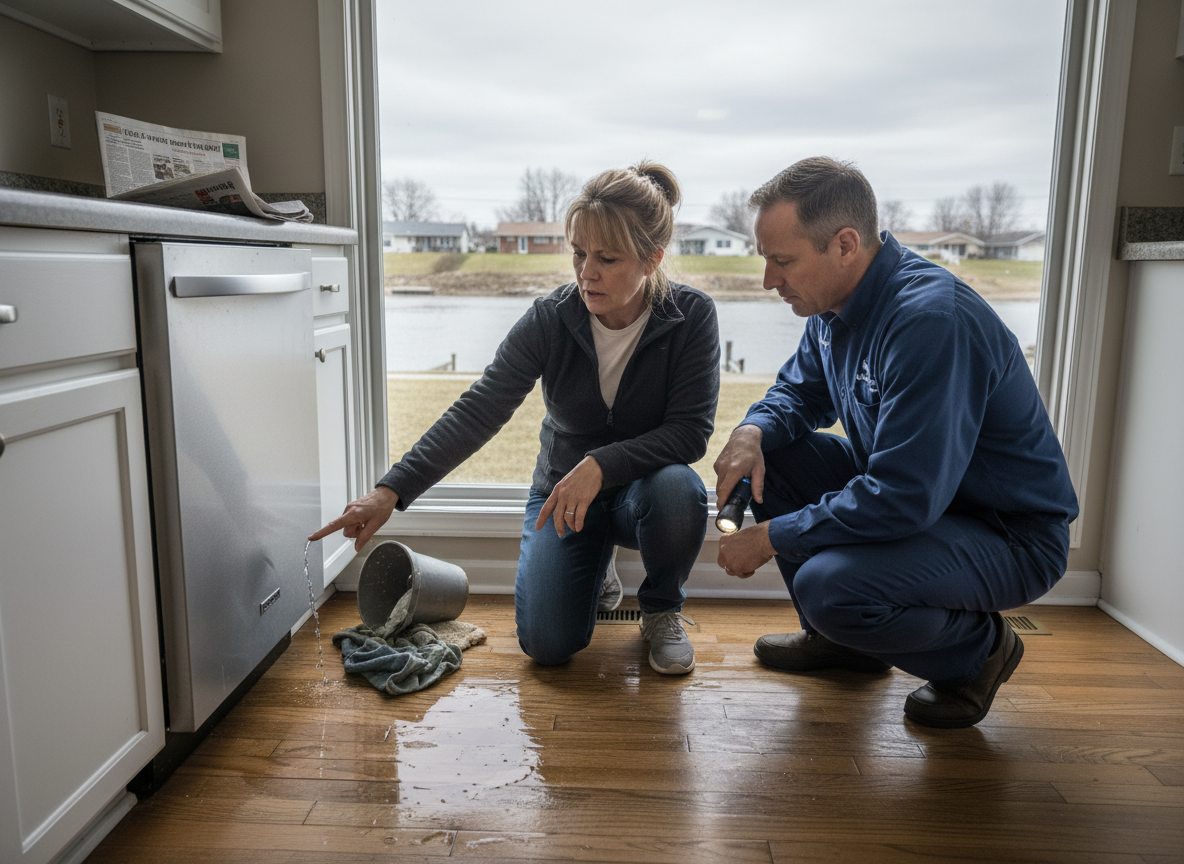
Homes near the Little Calumet River in South Holland see dishwasher leaks most often from degraded door gaskets and inlet valves stressed by repeated high-humidity cycles and occasional river flooding that raises crawl-space moisture.
River-Driven Moisture and Local Housing Stock
South Holland neighborhoods such as the areas east of the river and near Thornton share a housing stock built largely between 1950 and 1975. These homes typically sit on slabs or have shallow crawl spaces that sit close to the water table. When the Little Calumet River rises after heavy spring rains, groundwater migrates under foundations and keeps relative humidity above 65 percent for weeks. Dishwasher door gaskets absorb that moisture, swell, then crack within three to five seasons. Inlet valves located at the rear also corrode faster because the constant damp air accelerates mineral deposits from the municipal supply. Technicians working these blocks routinely find rust on the valve body that would not appear in drier western suburbs like Homewood.
Common Leak Points in South Holland Kitchens
Three locations account for the majority of calls. First, the sump assembly at the base of the tub develops hairline cracks after repeated thermal cycling in humid air; water then migrates under the unit and appears as a puddle near the toe kick. Second, the drain hose connection at the sink tailpiece loosens when older galvanized pipes expand and contract with temperature swings common along the river corridor. Third, the float switch mechanism sticks when silt carried by minor flood events settles inside the sump. Homeowners in Dolton and Calumet City report the same pattern because those blocks share the same soil and river influence. Checking these three points during routine service prevents most emergency leaks.
Seasonal Patterns That Accelerate Wear
Winter freeze-thaw cycles followed by rapid spring warming create the highest leak volume. Frozen ground prevents drainage, so meltwater pools against foundations and pushes humidity into kitchens. By April, calls for dishwasher leaks in South Holland increase noticeably. Summer storms bring a second spike when the river backs up into storm drains and forces water under slabs again. In both seasons the extra moisture shortens the life of plastic sump components from the typical 8–12 years to 6–9 years. Residents who keep basement dehumidifiers running at 50 percent relative humidity during these periods see fewer failures.
Practical Next Steps for Homeowners
Start by running a diagnostic cycle with the unit empty and watching for drips at the door bottom and rear valve area. Note any standing water under the unit after the cycle ends. If leaks appear only after heavy rain, schedule an inspection before the next storm season. For parts that must be replaced, matching the original valve or gasket to the exact model avoids repeat failures caused by aftermarket tolerances. When the dishwasher is more than seven years old and shares the same water line as a washer repair issue, replacing both appliances at once often proves more economical than repeated service calls. Readers facing repeated leaks after regional power events can review the Cost Guide for Appliance Repairs After Power Outages in the Chicago Suburbs for additional context on related electrical damage. Professional Dishwasher Repair remains available Mon–Sun 24/7 for South Holland residents who need on-site diagnosis.